What Is an Electrophoretic Coating System? Components and Working Principle
An in-depth professional guide into the technology, efficiency, and industrial application of modern e-coating solutions by TIMS.
In the realm of modern industrial surface finishing, the electrophoretic coating system, often referred to as E-coating or electro-deposition, stands as a pinnacle of precision and efficiency. Unlike traditional spray-painting methods that rely on mechanical atomization, an electrophoretic coating system utilizes electrical currents to deposit paint onto a metal substrate. This process ensures that even the most complex geometries, including deep recesses and internal cavities, receive a uniform, corrosion-resistant protective layer. For industries such as automotive manufacturing, home appliances, and heavy machinery, this technology has become indispensable for achieving high-durability finishes at scale.
As global manufacturing shifts toward more sustainable and cost-effective practices, the electrophoretic coating system has evolved to meet rigorous environmental standards. TIMS, a leader in advanced coating solutions, integrates cutting-edge automation and energy-recovery technologies into these systems to minimize waste and maximize throughput. This guide provides a comprehensive breakdown of how these systems function, the critical components that ensure their success, and why they outperform traditional powder coating in specific high-volume applications.
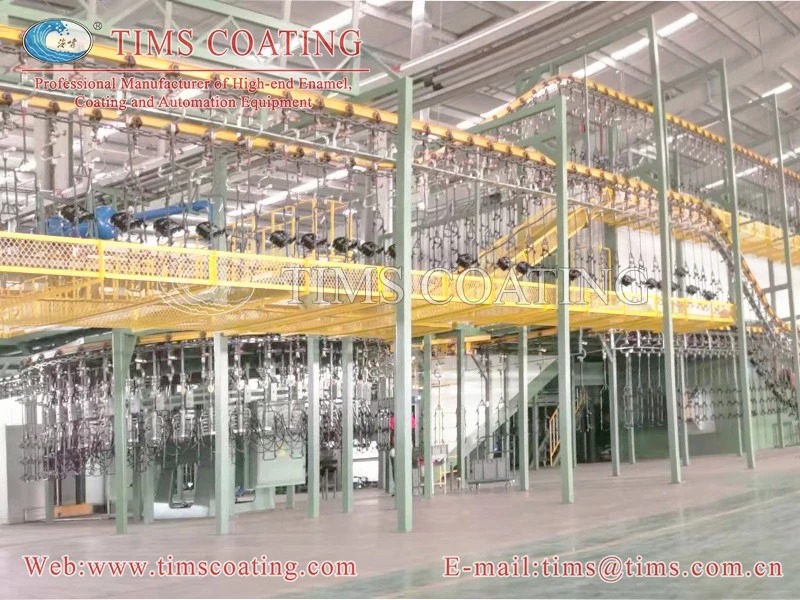
Figure 1: A fully automated electrophoretic coating system layout featuring integrated conveyor and curing zones.
Understanding the Modern Electrophoretic Coating System
An electrophoretic coating system operates on the fundamental principle of electrophoresis. When a metal workpiece is submerged in a bath containing charged paint particles and an electric field is applied, the particles migrate toward the workpiece. Depending on the charge of the paint particles, the process is categorized as either anodic or cathodic. Cathodic electro-deposition (CED) is the most widely used in modern industry because it offers superior corrosion resistance and better color stability compared to its anodic counterpart. The system is designed to create a closed-loop environment where excess paint is recovered through ultrafiltration, making it one of the most material-efficient coating methods available today.
The stability of an electrophoretic coating system depends heavily on the chemical balance of the bath. Parameters such as pH levels, conductivity, temperature, and solid content must be monitored in real-time to ensure consistent coating quality. Advanced systems provided by TIMS utilize IoT-enabled sensors and automated dosing units to maintain these variables within strict tolerances. This level of control allows manufacturers to achieve a precise coating thickness, typically ranging from 15 to 35 microns, which is difficult to replicate with manual spray systems. The result is a dense, high-adhesion film that serves as an excellent primer for subsequent topcoats or as a standalone finish for industrial parts.
Critical Components of an Electrophoretic Coating System
A high-performance electrophoretic coating system is composed of several integrated stages, each vital to the final quality of the product. The process begins with the Pre-treatment Zone. Here, the workpiece undergoes multi-stage cleaning, degreasing, and phosphating. Phosphating is particularly critical as it creates a microscopic crystalline structure on the metal surface, which significantly enhances the adhesion of the e-coat and provides a secondary layer of corrosion protection. Without a meticulously managed pre-treatment stage, even the most advanced electrophoresis bath will fail to deliver long-term durability.
Following pre-treatment, the workpiece enters the Electrophoresis Tank. This tank is the heart of the electrophoretic coating system, housing the paint emulsion, deionized water, and various additives. To keep the paint particles in suspension and prevent settling, a sophisticated circulation system—often consisting of eductors and high-volume pumps—constantly moves the liquid. Coupled with this is the Power Supply (Rectifier), which provides the precise DC voltage required for deposition. Modern TIMS systems feature digital rectifiers that can adjust the voltage profile based on the surface area of the load, ensuring that every batch is coated with identical precision regardless of part complexity.
The Ultrafiltration (UF) System is another indispensable component. It serves two purposes: it recovers dragged-out paint from the rinse stages and returns it to the main tank, and it provides clean "UF filtrate" for rinsing the workpiece. This closed-loop design ensures a material utilization rate of over 95%. Finally, the Curing Oven uses controlled thermal profiles to cross-link the polymer resin, turning the wet film into a hard, durable coating. TIMS utilizes gas-fired or electric ovens with air-recirculation technology to maintain temperature uniformity within ±5°C, ensuring that the finish is neither under-cured nor over-baked.
The Working Principle of Electrophoretic Deposition
The physics behind an electrophoretic coating system can be broken down into four distinct phases: electrolysis, electrophoresis, electro-deposition, and electro-osmosis. When the DC power is activated, water molecules at the electrodes undergo electrolysis, creating a pH gradient near the surface of the workpiece. Simultaneously, the charged paint particles migrate through the solution via electrophoresis toward the workpiece. Once they reach the surface, the localized pH change causes the particles to destabilize and "plate out" or deposit onto the metal, forming a continuous film.
A unique feature of this working principle is "throw power." Throw power refers to the ability of the electrophoretic coating system to reach shielded or recessed areas of a part. As the exterior of a part becomes coated, the electrical resistance of the film increases, which naturally forces the current—and thus the paint particles—to find uncoated areas further inside the workpiece. This self-limiting characteristic ensures that the coating thickness remains remarkably uniform across the entire surface. Finally, electro-osmosis occurs, where the electric field squeezes water out of the newly formed film, resulting in a relatively dry and dense coating even before it enters the curing oven.
Advantages of Implementing an Electrophoretic Coating System
The primary advantage of a electrophoretic coating system is its unparalleled efficiency. In traditional spray lines, overspray can lead to significant material waste, often resulting in utilization rates as low as 30% to 50%. In contrast, an e-coat system approaches 98% efficiency due to the ultrafiltration recovery process. Furthermore, because the process is fully automated, it eliminates the human error associated with manual spraying, leading to a much lower reject rate and more consistent quality across high-volume production runs.
Environmental sustainability is another key driver for adopting an electrophoretic coating system. Most modern e-coatings are water-based and contain very low levels of Volatile Organic Compounds (VOCs), making them much safer for operators and the environment compared to solvent-based liquid paints. Additionally, the ability to coat complex internal surfaces makes e-coating the gold standard for automotive chassis and appliance components that are prone to "inside-out" corrosion. By ensuring that every hidden corner is protected, manufacturers can significantly extend the lifespan of their products, enhancing their brand reputation for quality and durability.
TIMS: Your Professional Partner for Advanced Coating Solutions
As a premier global manufacturer, TIMS specializes in the design, engineering, and installation of high-efficiency coating lines. Our expertise spans from manual setups to fully automated, turnkey industrial solutions. We understand that every production requirement is unique, which is why we offer highly customizable configurations to meet specific capacity and space constraints. Our electrophoretic coating system technology is integrated with AI-powered thickness control and energy-recovery modules that reduce natural gas consumption by up to 20% compared to standard systems.
Beyond e-coating, TIMS provides a comprehensive suite of products including enamel production lines, powder coating systems, and advanced pre-treatment equipment. Our systems are certified to international standards such as CE, ISO9001, and SGS, ensuring that your investment is built to last and complies with global safety regulations. Whether you are producing automotive compressors, household appliances, or architectural panels, TIMS provides the technological edge needed to stay competitive in today's fast-paced market.
Our Specialized Equipment
- Fully Automated Electrophoretic Coating System - High-capacity solutions for automotive and appliance sectors.
- Powder Coating Production Lines - Advanced electrostatic technology for superior finishes.
- Porcelain Enamel Systems - High-temperature durability for cookwares and tanks.
Frequently Asked Questions
Q1: What is the maintenance cycle for an electrophoretic coating system?
An electrophoretic coating system requires daily monitoring of bath chemistry (pH, conductivity) and weekly cleaning of ultrafiltration membranes. A full system deep-clean and filter replacement are typically scheduled every 6 to 12 months, depending on production volume.
Q2: Can an electrophoretic coating system handle different metal types?
Yes, an electrophoretic coating system is highly versatile and can coat various conductive substrates including cold-rolled steel, galvanized steel, aluminum, and cast iron. However, the pre-treatment chemicals must be adjusted to suit the specific metal being processed.
Q3: How does an electrophoretic coating system save energy?
Modern electrophoretic coating systems save energy through high-efficiency rectifiers and heat recovery systems in the curing ovens. Since the e-coat film is very dense and uniform, curing times can often be optimized, reducing the overall thermal load required compared to thick-film powder systems.
Q4: What is the typical footprint of a professional electrophoretic coating system?
The footprint of an electrophoretic coating system varies based on part size and throughput requirements. A standard automated line for mid-sized parts might require 30 to 50 meters in length. TIMS offers modular designs to optimize space for factories with limited floor area.
Q5: Why choose an electrophoretic coating system over traditional powder coating?
While powder coating is excellent for thick decorative finishes, an electrophoretic coating system is superior for corrosion protection, especially for complex parts with internal cavities. It offers higher automation, better material utilization, and a more uniform coating thickness that is difficult to achieve with powder spray guns.
Ready to Optimize Your Production?
Contact TIMS today for a professional consultation on your next electrophoretic coating system project. Let our experts design a high-efficiency solution tailored to your industrial needs.